Wednesday, February 24, 2010

Choosing My Conceptual Personae Pt.2


One of my favorite rap artists is Daniel Dumile, better known as MF Doom (although now he goes by just Doom). Perhaps the one thing that intrigues me most about Doom is that his rap personae is based on the villain Dr. Doom from the Fantastic Four series. Dumile's real face has never been revealed in public since he began wearing the metal mask based on the same mask worn by the character Dr. Doom. This anonymity allows him to not have to deal with the "side effects" of the celebrity status. Not only are his lyrical acrobatics amazing, he is quite the fan of appropriating music/sound fx to include in his songs. I included in a post before a song from his album Mm...Food. In this album he takes sound clips from old Fantastic Four and Justice League cartoons to create the foundation for the majority of the songs on the album. The album's title is also an anagram of Mf Doom and is themed around food and related issues...even food safety. It's an amazing album that I encourage you readers to check out.


The second album is another album released by Mf Doom under the moniker King Geedorah, a character based on King Gidorah from the Godzilla series. In this album Doom also uses appropriated sound clips to weave together a story that fits in with the flow of songs on the album. Much of the content of the album is a critique of society and its insecurities; Doom speaks about the album:

"You should listen to the album for what it is and not expect it to be like the average "rap" stuff you’re probably used to. Geedorah is a space monster. He's not from the Earth. I made it different on purpose. A blend of ill lyrics and instrumentals. To me its way iller than any of the wack shit out now... This whole album is Geedorah's alien perspective on humans. This is done intentionally to show the listener a mirror image of his/herself and the way we see each other. On the album we cover different subjects ranging from race issues to the neglect of children. Some might find the word "Nigger" offensive, or the line about the young girl not being able to read maybe considered a "bad taste" joke. All these insecurities are within us."


The reason I post this under the title of Conceptual Personae, is because I wonder if this could be a possible method/personae to adopt in order to outline a concept that fits in the medium of the internet - using recognizable media to weave an understandable narrative. It's definitely possible and has been something that I always wanted to do. Perhaps a possibility for Part 2 of our class.

Let's Get Heuretical

Now that the first part of our semester is coming to a close we have to start constructing a "poetics" or a methodology for constructing our concepts in order to move forward with our projects.

Recap:

- Deleuze and Guattari instruct us on how to create a Concept (it is made up of three components: the plane of immanence, the conceptual personae, and the concept/components) and that Advertising and consumerism has taken over the construction of concepts in our modern times.

- Marchand has showed us how advertising came to be a powerful force in society, capable of swaying public opinion and taste at the drop of a hat. We can catalogue the various techniques they used (the great parables, visual icons, one-on-one acknowledging of the audience, etc.) and see that many of these are still relevant and being used today.


Combo:

An easy set of general instructions for our first part can be generated by seeing were the two texts match up, creating an "intertext."

- First you identify an Event (our public policy topic) to which you will create your concept.
- The Event will exist within a Plane of Immanence, and so identifying the territory of your p.o.i will come next.
- From there you will create a conceptual personae (similar to the advertisers' marketing characters) that will enact your concept and allow you to bring an Unthought (a perspective or way of understanding that hasn't been articulated yet) to the Event.
- The conceptual personae can utilize some of the strategies of advertising in order to better present this Unthought - having personality/charm, appealing to the "individual" within the audience, and creating a sense of empathy in the viewer/reader.

From here, we will continue on in Part Two, creating our concept, figuring out if it works and adjusting accordingly. Not sure if this is going to work, but we have to have faith....in philosophy.

A parting gift:

Tuesday, February 23, 2010

"Stephen Colbert Destroys Lawrence Lessig"

I thought it might be interesting to post a video of the interview between Stephen Colbert and Lawrence Lessig because I think Lessig's ideas about copyright licenses and the current economies are interesting and valid. While searching for this video however I came across another blog in which the writer talks about how weak Lessig's argument was in the context of the interview. The writer's post makes sense, and although I think much of Lessig's nervousness was due to the format of the interview, it's important to see or read "the other side of things." Here's a link to the blog, The Freeload, where you can find a video of the interview embedded there as well.

Monday, February 22, 2010

Creative Commons

Creative Commons is a non-profit organization based out of San Francisco dedicated to the establishing of new copyright-licenses to allow for the expanded use of creative works available for others to build upon legally and to share. Founded in 2001, by our good friend Lawrence Lessig, Hal Abelson, Eric Eldred with the help of the Center for the Public Domain, the first creative commons licenses were created in 2002. The licenses allow for "baseline" rights outlined by the artist/creator that dictate how their content/product can be used. The four main licenses are:


- Attribution (by): Licensees may copy, distribute, display and perform the work and make derivative works based on it only if they give the author or licensor the credits in the manner specified by these.

- Noncommercial or NonCommercial (nc): Licensees may copy, distribute, display, and perform the work and make derivative works based on it only for noncommercial purposes.

- No Derivative Works or NoDerivs (nd): Licensees may copy, distribute, display and perform only verbatim copies of the work, not derivative works based on it.

- ShareAlike (sa): Licensees may distribute derivative works only under a license identical to the license that governs the original work. (See also copyleft.)


Here's a pretty sweet video from the Creative Commons website explaining the licensing system.

Brush with the Law

Doing all this research into the law of copyright and piracy, and reading about cases in which people were sued for copyright infringement reminds me of my own brush with the law a few years back. I was an undergrad then, in my third year, working on an animation project for a class. Our assignment was to create a short 3D animation and since I had been used to working with 3D Studio Max (a modeling/animation program by Autodesk) I decided that I would pirate a copy of it to use on my laptop. I did so with relative ease and had the program up and running - the problem was that I hadn't removed it from my sharing queue in my torrent client and so I was basically uploading it to other users. Autodesk caught wind of this and immediately contacted Cox, my isp. Autodesk threatened to sue but luckily Cox has a policy in which they allow ask the subscriber about the problem. Without going into details, I got Cox to give me a second chance and avoided the lawsuit from Autodesk - a disaster I would not have been able to afford...or even survive. I found this interesting article while perusing for info on the RIAA. See the link below.

How Not To Get Sued For File-Sharing

Don't You Have Better Ways of Spending 5 Years and $250,000?


The RIAA's website has a little more of a "tug-at-your-heartstrings" approach, describing how piracy affects the jobs of all those involved in the entertainment industry....that's right, even the little guys. I find it a little more personable than the MPAA's website - they even outline for you, very simply, how/what things are illegal. According to the "Piracy Online" section:

"Online piracy is the unauthorized uploading of a copyrighted sound recording and making it available to the public, or downloading a sound recording from an Internet site, even if the recording isn't resold. Online piracy can now also include certain uses of "streaming" technologies from the Internet. Because of the nature of the theft, the damage is not always easy to calculate but not hard to envision. Millions of dollars are at stake – not to mention our ability to invest in the next generation of music."

I can understand what the organization is arguing for, artists/musicians/etc. work very hard to produce their art and they should be compensated for it in the public market, but it seems to me that it's not necessarily the idea of paying people for content that's the issue, it's the practices that are carried out in enforcing that idea. This is exampled in the recent phenomena of musicians releasing their albums in a "name-your-price" format on their websites for their fans. This format, on average, has actually made more money than the traditional method of releasing it through a record label. Regardless of your opinion on this issue (or my opinion for that matter) it's important to know the law - and the RIAA can help:

Read about it here.

OiNK! Verdict


Just recently, Allan Ellis, creator of the BitTorrent tracking website Oink's Pink Palace, was found not guilty of conspiracy to defraud in January (of 2010). The site, similar to the Pirate Bay, was shut down by the British and the Dutch police after a two year investigation lead by the International Federation of the Phonographic Industry and the British Phonographic Industry.

Kerrang! Radio's website has an interesting article on the event and even has some nice radio interviews.

The victory in the case of Ellis, in a way, counters the decisions made in the case of the Pirate Bay trials. The jury voted unanimously for Ellis's innocence (12 to 0), allowing him to walk away a free man with the comfort that the verdict could not be appealed. To say that the outcome of the trial was a victory for the pirates' side of this legal battle would be hypocritical. Regardless of any legal sentencing, the loss of Oink as a forum for users to share music is the real defeat. The website, described by its users as one of the world's largest and most meticulously maintained online music repositories, was even supported by the likes of Trent Reznor, frontman for the band Nine Inch Nails, and strong advocate for the free distribution of music. He stated in regards to the site:

"If OiNK cost anything, I would certainly have paid, but there isn't the equivalent of that in the retail space right now. iTunes kind of feels like Sam Goody to me. I don't feel cool when I go there. I'm tired of seeing John Mayer's face pop up. I feel like I'm being hustled when I visit there, and I don't think their product is that great. DRM, low bit rate, etc. Amazon has potential, but none of them get around the issue of pre-release leaks. [...] I'm not saying that I think OiNK is morally correct, but I do know that it existed because it filled a void of what people want."

Girl Talk

One of my favorite musicians out there right now, Mr. Gregg Gillis, otherwise known as Girl Talk, is perhaps one of the better known figures of appropriative creation in music today. For those of you who don't know who he is, Girl Talk is a DJ/mashup artist that takes bits of other songs and remixes them into new songs. He was featured in both of the documentaries that I blogged about earlier. You can check out his process below:


Girl Talk's music has come up as part of this issue of fair use. Fair use, according to the U.S. Copyright Office is determined by four main factors:

1. The purpose and character of the use, including whether such use is of commercial nature or is for nonprofit educational purposes
2. The nature of the copyrighted work
3. The amount and substantiality of the portion used in relation to the copyrighted work as a whole
4. The effect of the use upon the potential market for, or value of, the copyrighted work


You can read more about fair use on their website here.
This issue of fair use in Girl Talk's music is a difficult one to navigate since both sides of the argument make sense (creative freedom and progression vs. the law) - so much so that there's even a mock trial of what might go down between Girl Talk and the owners of Queen's "Bohemian Rhapsody" (which Gillis has used as a sample in one of his albums).

Regardless of the legal nature of Girl Talk's music, it's still fun stuff to shake the booty to. I got to see him in concert when he came to Gainesville last spring. At one point I was so close to him that he and I joined hands and danced to the music he was playing.

Before this post gets too long, below is a video of a class project that was done in conjunction with the Remixer's Manifesto documentary and the Open Source Cinema Project. The media communications class from Concordia University rotoscoped a sequence of performance clips of Girl Talk. It sort of looks how you feel at a Girl Talk concert, colorful, sweaty, dazed, and confused....

Remixing Propaganda

Here's a little interesting bit 'o MPAA rhetoric


Of course this garnered a reaction - check out the remxing of the original poster


I think I like the new one better....how 'bout you?

Sunday, February 21, 2010

Choosing My Conceptual Personae - Arrrrr?


So I've been thinking about what my conceptual personae should be and I can't quite decide. The most obvious answer would probaly be a pirate, but maybe that's not personable enough. Then again I've been doing these Count of Monte Christo stills so perhaps that could be my CP. The only problem with that is that I don't feel like the character really connects with my event. I'll have to do some research but I think a character that blends the two will work the best - like Blackbeard or Captain Jack Sparrow or something like that.

Piracy is a crime


and then the parody....


*Note: interestingly enough, the parody video's embed code on youtube was taken down by request....so I promptly pirated that video to upload it to blogger. Suck it internet.

Blogetics

Our presentation method for our project comes in the form of this blog. Since our project is to create a philosophy for the medium of the Internet the use of a blog makes sense. It's quick, parsable, you link to other things, and post media. But I think we have to be careful about how we post to our blogs, or else we may fall into the trap of posting the philosophy book onto the blog in short bursts - which is not what we want. As for myself, I enjoy that the blog allows me to explore how my public policy works via piracy itself. It's quite fun being a philosophical media pirate.

Saturday, February 20, 2010

MPAA Piracy regulations


It's relatively easy to find the policies of the two major trade organizations that handle all the media that gets disseminated throughout American. The MPAA (Motion Picture Association of America) even has a link to a simple and easy-to-understand website outlining what copyright exactly is. What's this website called? Well "What Is Copyright Protection?" of course! The basic premise, according to the website, is:

Copyright is a protection that covers published and unpublished literary, scientific and artistic works, whatever the form of expression, provided such works are fixed in a tangible or material form. This means that if you can see it, hear it and/or touch it - it may be protected. If it is an essay, if it is a play, if it is a song, if it is a funky original dance move, if it is a photograph, HTML coding or a computer graphic that can be set on paper, recorded on tape or saved to a hard drive, it may be protected. Copyright laws grant the creator the exclusive right to reproduce, prepare derivative works, distribute, perform and display the work publicly. Exclusive means only the creator of such work, not anybody who has access to it and decides to grab it.

You can read more about it via the link below:
What Is Copyright Protection

Also, here's the link to the Piracy and the Law section of the MPAA's website:
MPAA - Piracy and the Law

The Pirate Bay

The Pirate Bay is a BitTorrent index website based out of Sweden that was created by Gottfrid Svartholm, Fredrik Neij, and Peter Sunde. It is currently run by Gottfrid Svartholm and Fredrik Neij and has been subject to numerous lawsuits regarding the role of the website in "assisting in making copyrighted content available." In 2006 the Swedish police conducted a raid on the Pirate Bay and confiscated several of their servers, causing the website to temporarily shut down. In January of 2008 charges were filed against the creators and each of the defendants were sentenced to a year in jail and told to pay $3.6 million in damages at the close of the lawsuit in April of 2009. Appeals were made the same day the verdict was announced and are now being processed, postponing any actual jail time/fees. The case is particularly interesting because the site only allows access to illegally copied material, it doesn't actually host any of the content. Should what can basically be considered a search engine be liable for the actions of its users? It raises some interesting questions, and while the entertainment industry is touting this as a victory in the fight against piracy, many agree that if they continue to consider this a legal issue and not a business model issue, then they'll never "fix" the problem of users hosting and sharing illegal content.

MPAA pirating?

In searching for a picture of a pirate flag to use for my blog banner, I came across this article written in 2007 about the MPAA and its use of pirating in its case against BitTorrent, a well known search site for torrent files (a lot of which are illegal music/movies).

Hacker Goes To Hollywood

Thursday, February 18, 2010

Filling in the CATTt


CATTt generator (heuretics)

C (contrast) = Advertising (Marchand, commodity sign)

We know that, according to D & G that, advertising has taken control of the creation of concepts for the purposes of capitalism. We must take note of their methodology and co-opt that for our own purposes (this is how we contrast): introducing the Unthought to our public policy topic.

A (analogy) = Art (Evans, appropriation)

To be filled out during Part 2 of the semester

T (theory) = Philosophy (Deleuze and Guattari)

We look to Delueze & Guattari for a set of instructions for creating a concept. They establish for us the components of philosophy so that we may identify them for ourselves and simply apply the instructions to our own project.

T (target) = Public Policy Topic/Disaster (Virno, public policy formation)

To be filled out during Part 2 of the semester

t (tale) = Blog (Dean, Stand-Up comedy).

While we haven't read the book yet (this won't be done until Part 2), we are using the blog as a stage on the internet for enacting our process of heuretics and thinking through the construction of our concepts.

RiP!: Remixer's Manifesto

Finally getting around to blogging about this one - this documentary was less neutral and really seemed more like one filmmaker's exploration of the issue via his interest in the artist Girl Talk (one of my favorite "mashup" artists). From the music he goes down the rabbit hole of intellectual property, regulation, and the cultural ramifications of a society of "strict" copyright enforcement.

The music, for one, was great in this film and it provided a bit of the history of copyright, but the thing I found most interesting about the documentary was the economic aspect of copyright that was presented by several people - particularly Mr. Lawrence Lessig. Lessig is noted for his work against restrictive copyright and trademark policies. You can check out his blog here. Lessig also appears in the Good Copy Bad Copy documentary I blogged about earlier.

Below is a screen shot of the Remixer's Manifesto that was established and referenced to in the documentary itself. The main point that I took from the documentary itself was that the current economic/business model for ownership of intellectual property is not working (in the age of the internet where "information" is so readily available) and so the goal isn't to have one or the other (I think too much of anything, even appropriation, isn't a good thing), but to have a situation where the "remixing" of culture can occur without necessarily "hurting" anyone - business or artist.

Concept...Sunny Side Up: Appropriating/Articulating Pt. 2


*Note: this metaphor may not be the best for illustrating such a complicated subject, but it's funny looking, and it makes me laugh so....take from it what you will.

In an attempt to further elaborate the process of constructing our CATTt, I will attempt to summarize a bit of Deleuze and Guattari with the help of one of my favorite breakfast foods ever - eggs, sunny side up. Since D & G occupy our Theory slot, we are using them to give us a set of instructions for creating a Concept (proper), which is composed of three major things:

- the Plane of Immanence
- the Conceptual Personae
- Components/Concept

I can further explain what each of these three components are made up of (the rabbit hole gets deeper) but for now, simply put, the plane of immanence is the territory of reality/consciousness that directly relates to the problem (the Target) that the Concept tries to understand - the whole egg (white and yolk). The conceptual personae is the character or "avatar" that enacts the Concept and allows us to think through it - perhaps this is the person eating breakfast. The components are the bits of things/actions/characteristics that occupy the chaotic plane of immanence. We take them and bring them into a different consistency within the plane of immanence into the form of our concept - the pepper flakes. The concept in this image is the yolk because it literally is a different consistency than the rest of the egg. It is part of the plane of immanence, but separate from it and perhaps is the "meatiest" part of all of this.

Tuesday, February 16, 2010

Establishing the problem - not solving though

Below is a copied email I sent out to my class about the two films I watched this weekend about my public policy issue and how I'm trying to reconcile what we've figured out in class from the two texts we've read with the information I'm gathering (about my policy issue). I made the mistake however of stating at the end that I was going to solve the issue through the concept I create about my topic. I was quickly corrected by Professor Ulmer that as a class experiment, our goal isn't to solve the issue we choose, but to bring about an "unthought" or a way of thinking about/understanding the topic, that may not have been previously established.


So this weekend I watched Good Copy Bad Copy (which I blogged about) and RIP!: The Remixer's Manifesto (which I haven't blogged about yet) in an effort to gain at least a general background on the issue of piracy (perhaps specifically in regards to music, but also to other media) and appropriation. I thought the problem was that these corporations wanted to keep their money and so any appropriation of any form of media was out of the question; but this was taking a biased stance (i've been blogging about neutrality quite a bit to keep reminding myself of it).

I think the question, and this is based on some of the points brought up in both documentaries, is that if the old business model of intellectual property and the dissemination of media in culture will not work in the age of the internet, what new model can we create that will work? We know that there's just too much power/control in the hands of the people to try to regulate all of it - this is exampled by the many protests enacted by those who believe counter to what the corporations (specifically the RIAA and MPAA) try to enforce, and by the ethical questions brought about by the American government's attempts at controlling/eliminating piracy (suing individuals who download music, imposing policies internationally, etc.). And we know, if you agree, that the regulation of appropriation (or piracy as some consider it) hinders creativity (a point made by the Remixer's Manifesto), then we must find a neutral ground or compromise that allows for both a system of payment/credit for one's intellectual property (media) to be established that doesn't hinder people's creativity in taking that property and "remixing" it to create new forms of property (media).


I just simply copied the email since I thought it expressed my thoughts just as well as if I had taken the time to rewrite the whole thing again. Hope you enjoyed the second edition of the Count of Monte Christo stills (I have to figure out a better name for those).

Friday, February 12, 2010

Good Copy Bad Copy


This documentary was incredibly interesting as it not only focused on the legal issues that have cropped up in America, but how Copyright has been interpreted around the world. At first I was finding it difficult to remain neutral (remember that I have to be unbiased to create my Theory) and not immediately take the sides of the pirates, but the documentary itself did a good job of not taking sides - the fascinating thing was that I found myself starting to see what the "corporations" were saying. I still don't completely agree but some of the points they were articulating made sense.

One distinction the documentary made was the difference between sampling (taking bits of music and using those bits in other songs) and piracy (file-sharing). There is no arguing against it, piracy is illegal. In regards to the Grey Tuesday event that was organized in support of the Grey Album, Jonathan Zittrain, professor of Internet law at Harvard Law School, comments that, "As a matter of pure legal doctrine, the Grey Tuesday protest is breaking the law, end of story. But copyright law was written with a particular form of industry in mind. The flourishing of information technology gives amateurs and homerecording artists powerful tools to build and share interesting, transformative, and socially valuable art drawn from pieces of popular cultures. There's no place to plug such an important cultural sea change into the current legal regime." (Rimmer, Matthew, "Digital Copyright and the Consumer Revolution")

I found myself thinking, "Yes, piracy, on a legal level, is wrong - but in my opinion, sampling is all good." Those who sample have come under the criticism that the method is uncreative. I feel this is wrong, but then again, I have to remain neutral.

The primary question those being interviewed were asking was how should businesses approach the copyright (protection) and distribution (exposure) of intellectual property? The old model of doing so does not work due to the growth of the internet as a powerful force for the spread of information. The filmmakers don't really provide answers to this question, but I suppose that wasn't really the point of the film. In any case, it was fun to watch and very informative of the issue.

Charbydis the Concept

This post is basically a restating of an email that I sent out to our class list - the imagery was so strong for me that I decided it need to be on here.


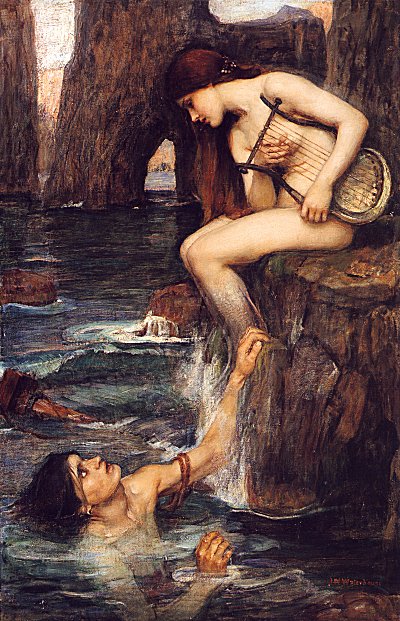
In thinking about this new consumer society that is being illustrated by Marchand, I couldn't help but think about the Greek sea monster Charbydis. Marchand writes about advertisers convincing this newly enfranchised "mob," whose tastes they intended to uplift, that these commodities (established in a hierarchy of class and "style"), when bought in greater and greater quantities harmonized their lives and created a sense of elegance and luxury. "In some industries, the ensemble provided a welcome solution to the problem of inducing people 'to use more and more, in order to escape the bugaboo of market saturation.'" (137) This is hardly in tune with the model of utility that was once prevalent in American society. "Once accepted, the ensemble idea profitably increased the average size of each consumer's purchase." (137) So consumerism (or perhaps the consumer) became this whirlpool, sucking in ship after ship, product after product, "satisfaction" after "satisfaction" - never to be satiated. If we can learn for their [the advertiser's] model for the construction of our own concept how can we construct it so that it would almost be impossible (for our readers - people on the internet) not to get sucked in. Is it through the digital image, the empathy/sympathy for the conceptual persona? Or maybe the whirlpool imagery is too violent - perhaps a siren's song? Either way, our purpose is different - which why we place the Marchand text in the contrast slot of our CATTt. Maybe this is a tangent, but the image was so striking to me I thought I'd share it.

I'm now about to do something fun for a change and watch a movie - ah, but not just any movie - a documentary about pirating music called Good Copy Bad Copy.

Monday, February 8, 2010

Appropriating....then articulating

The flurry of getting art work fixed up for shows has passed and now I have nothing but the stress of coming up/creating/making new art works for my grad seminar class. And then there's this class. I say it takes up a lot of my time, but really I'm just having some difficulty managing that time - you could say this pirate has been spending too much time listening to sweet sweet call of the sirens, rather than charting the course for his ship. And so I turn to what I do best to sort of catch up.

I'm reading my fellow classmates' and professor's blogs and start to see a pattern emerging of defining or articulating the parts of this CATTt process that is our assignment/project for the first part of the semester. I knew I had to do that...I just didn't know how, and to what extent. So here goes a few baby steps, or small paddles, in a direction (it may not be the right one).

We have two main texts for the first part of the semester: What is Philosphy? by Delueze and Guattari & Advertising the American Dream by Roland Marchand. The two occupy the Theory and Contrast slots of our CATTt respectively. We are to see where and how the two meet up or match in terms of creating a concept. D & G give us instructions on how to create a concept in WIP?, and state that the creation of concepts has been usurped by Consumerism (advertisers create "concepts," just for different purposes: selling commodities). Marchand shows us how Advertising shaped society's way of thinking or perspective of the world (into a product-based/consumer mindset) in 1920-1940s America. These two foundation texts will help us create a methodology for the creation of concepts that will be effective (modeled on the efficacy of advertising - Marchand) for the purposes of philosophy (D & G) and not the commodity.

That's quite a bit there, and before this post starts to get long and convoluted, I'll stop. I may have jumped ahead a bit and will probably further articulate the various parts of the CATTt, what a concept is made out of, and what advertising has to do with all of it in future posts.

Thursday, February 4, 2010

The Grey Album

So in efforts to compile information about our public topic - information from both sides of the fence. One relatively recent event that comes to mind was the controversy that erupted over the dissemination of the Grey Album.

The Grey Album was the project of Brian Joseph Burton (aka DangerMouse) in which Burton took a cappella tracks from Jay-Z's The Black Album and combined them with illegal instrumental samples from The Beatles' The White Album. Originally meant to be just an art project, Burton did not intend to commercialize the album and only planned to produce around 3000 copies for distribution. When the album was leaked onto the internet its popularity skyrocketed which caused Burton to appear on EMI's radar. Despite sending cease and desist letters and threatening legal action EMI gave up its campaign against Burton and the Grey Album because of substantial online protests. You can read about it here. The album is one of my favorites and provides an interesting example of a project that was caught up in the argument against legal control over creative production.

Monday, February 1, 2010

Vomitpost

So much has been happening these past few weeks. There was an art show (Cirque Des Arts) and I got some recognition for my piece. You can read the original proposal/documentation here. I haven't updated it in a while so I have quite a bit of material to post to the updates section. That project involves appropriation.


Which brings me to this class. I suppose it would be a good idea to start outlining my CATTt. First things first, the target: my public policy issue is piracy. I believe I'm starting to lean towards music piracy. This involves sampling or creating new music with bits of other music, and music piracy in general (i.e. downloading albums illegally).

I'm interested in this topic because, aside from being a pirate myself, it questions issues of creative control, authorship/ownership, and consumerism - all issues related to the readings we're doing this semester I feel. But according to Ulmer I have to be careful not to take sides - I have to be neutral. We are to understand our topic unbiasedly and then form a philosophy based on it.


We've finished reading WIP? and are now on to the Marchand. They fit into the Theory and Contrast slots of our CATTt respectively. How exactly they fit, I can't yet articulate but that's what we're taking the class for right? Perhaps I can better articulate them later when I'm not about to fall asleep.

Speaking of Vomitpost - here's a track called Vomitspit by MF Doom. The song is one of my favorites and contains a sample from "Happy You Should Be" by Mashmakhan