Now that the first part of our semester is coming to a close we have to start constructing a "poetics" or a methodology for constructing our concepts in order to move forward with our projects.
Recap:
- Deleuze and Guattari instruct us on how to create a Concept (it is made up of three components: the plane of immanence, the conceptual personae, and the concept/components) and that Advertising and consumerism has taken over the construction of concepts in our modern times.
- Marchand has showed us how advertising came to be a powerful force in society, capable of swaying public opinion and taste at the drop of a hat. We can catalogue the various techniques they used (the great parables, visual icons, one-on-one acknowledging of the audience, etc.) and see that many of these are still relevant and being used today.
Combo:
An easy set of general instructions for our first part can be generated by seeing were the two texts match up, creating an "intertext."
- First you identify an Event (our public policy topic) to which you will create your concept.
- The Event will exist within a Plane of Immanence, and so identifying the territory of your p.o.i will come next.
- From there you will create a conceptual personae (similar to the advertisers' marketing characters) that will enact your concept and allow you to bring an Unthought (a perspective or way of understanding that hasn't been articulated yet) to the Event.
- The conceptual personae can utilize some of the strategies of advertising in order to better present this Unthought - having personality/charm, appealing to the "individual" within the audience, and creating a sense of empathy in the viewer/reader.
From here, we will continue on in Part Two, creating our concept, figuring out if it works and adjusting accordingly. Not sure if this is going to work, but we have to have faith....in philosophy.
A parting gift:
Showing posts with label Deleuze and Guattari. Show all posts
Showing posts with label Deleuze and Guattari. Show all posts
Wednesday, February 24, 2010

Tuesday, February 16, 2010
Establishing the problem - not solving though
Below is a copied email I sent out to my class about the two films I watched this weekend about my public policy issue and how I'm trying to reconcile what we've figured out in class from the two texts we've read with the information I'm gathering (about my policy issue). I made the mistake however of stating at the end that I was going to solve the issue through the concept I create about my topic. I was quickly corrected by Professor Ulmer that as a class experiment, our goal isn't to solve the issue we choose, but to bring about an "unthought" or a way of thinking about/understanding the topic, that may not have been previously established.

So this weekend I watched Good Copy Bad Copy (which I blogged about) and RIP!: The Remixer's Manifesto (which I haven't blogged about yet) in an effort to gain at least a general background on the issue of piracy (perhaps specifically in regards to music, but also to other media) and appropriation. I thought the problem was that these corporations wanted to keep their money and so any appropriation of any form of media was out of the question; but this was taking a biased stance (i've been blogging about neutrality quite a bit to keep reminding myself of it).
I think the question, and this is based on some of the points brought up in both documentaries, is that if the old business model of intellectual property and the dissemination of media in culture will not work in the age of the internet, what new model can we create that will work? We know that there's just too much power/control in the hands of the people to try to regulate all of it - this is exampled by the many protests enacted by those who believe counter to what the corporations (specifically the RIAA and MPAA) try to enforce, and by the ethical questions brought about by the American government's attempts at controlling/eliminating piracy (suing individuals who download music, imposing policies internationally, etc.). And we know, if you agree, that the regulation of appropriation (or piracy as some consider it) hinders creativity (a point made by the Remixer's Manifesto), then we must find a neutral ground or compromise that allows for both a system of payment/credit for one's intellectual property (media) to be established that doesn't hinder people's creativity in taking that property and "remixing" it to create new forms of property (media).
I just simply copied the email since I thought it expressed my thoughts just as well as if I had taken the time to rewrite the whole thing again. Hope you enjoyed the second edition of the Count of Monte Christo stills (I have to figure out a better name for those).

So this weekend I watched Good Copy Bad Copy (which I blogged about) and RIP!: The Remixer's Manifesto (which I haven't blogged about yet) in an effort to gain at least a general background on the issue of piracy (perhaps specifically in regards to music, but also to other media) and appropriation. I thought the problem was that these corporations wanted to keep their money and so any appropriation of any form of media was out of the question; but this was taking a biased stance (i've been blogging about neutrality quite a bit to keep reminding myself of it).
I think the question, and this is based on some of the points brought up in both documentaries, is that if the old business model of intellectual property and the dissemination of media in culture will not work in the age of the internet, what new model can we create that will work? We know that there's just too much power/control in the hands of the people to try to regulate all of it - this is exampled by the many protests enacted by those who believe counter to what the corporations (specifically the RIAA and MPAA) try to enforce, and by the ethical questions brought about by the American government's attempts at controlling/eliminating piracy (suing individuals who download music, imposing policies internationally, etc.). And we know, if you agree, that the regulation of appropriation (or piracy as some consider it) hinders creativity (a point made by the Remixer's Manifesto), then we must find a neutral ground or compromise that allows for both a system of payment/credit for one's intellectual property (media) to be established that doesn't hinder people's creativity in taking that property and "remixing" it to create new forms of property (media).
I just simply copied the email since I thought it expressed my thoughts just as well as if I had taken the time to rewrite the whole thing again. Hope you enjoyed the second edition of the Count of Monte Christo stills (I have to figure out a better name for those).
Monday, February 8, 2010
Appropriating....then articulating
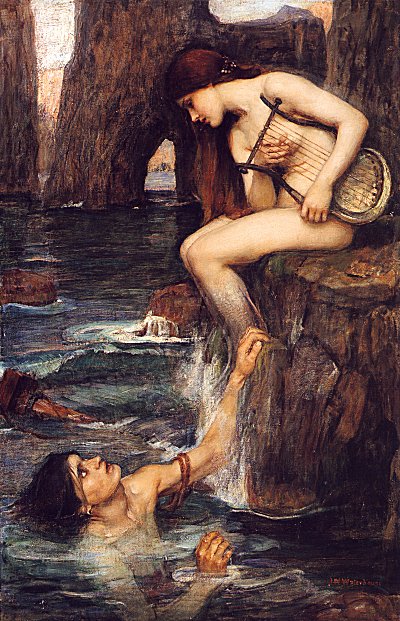 The flurry of getting art work fixed up for shows has passed and now I have nothing but the stress of coming up/creating/making new art works for my grad seminar class. And then there's this class. I say it takes up a lot of my time, but really I'm just having some difficulty managing that time - you could say this pirate has been spending too much time listening to sweet sweet call of the sirens, rather than charting the course for his ship. And so I turn to what I do best to sort of catch up.
I'm reading my fellow classmates' and professor's blogs and start to see a pattern emerging of defining or articulating the parts of this CATTt process that is our assignment/project for the first part of the semester. I knew I had to do that...I just didn't know how, and to what extent. So here goes a few baby steps, or small paddles, in a direction (it may not be the right one).
We have two main texts for the first part of the semester: What is Philosphy? by Delueze and Guattari & Advertising the American Dream by Roland Marchand. The two occupy the Theory and Contrast slots of our CATTt respectively. We are to see where and how the two meet up or match in terms of creating a concept. D & G give us instructions on how to create a concept in WIP?, and state that the creation of concepts has been usurped by Consumerism (advertisers create "concepts," just for different purposes: selling commodities). Marchand shows us how Advertising shaped society's way of thinking or perspective of the world (into a product-based/consumer mindset) in 1920-1940s America. These two foundation texts will help us create a methodology for the creation of concepts that will be effective (modeled on the efficacy of advertising - Marchand) for the purposes of philosophy (D & G) and not the commodity.
That's quite a bit there, and before this post starts to get long and convoluted, I'll stop. I may have jumped ahead a bit and will probably further articulate the various parts of the CATTt, what a concept is made out of, and what advertising has to do with all of it in future posts.
Subscribe to:
Posts (Atom)